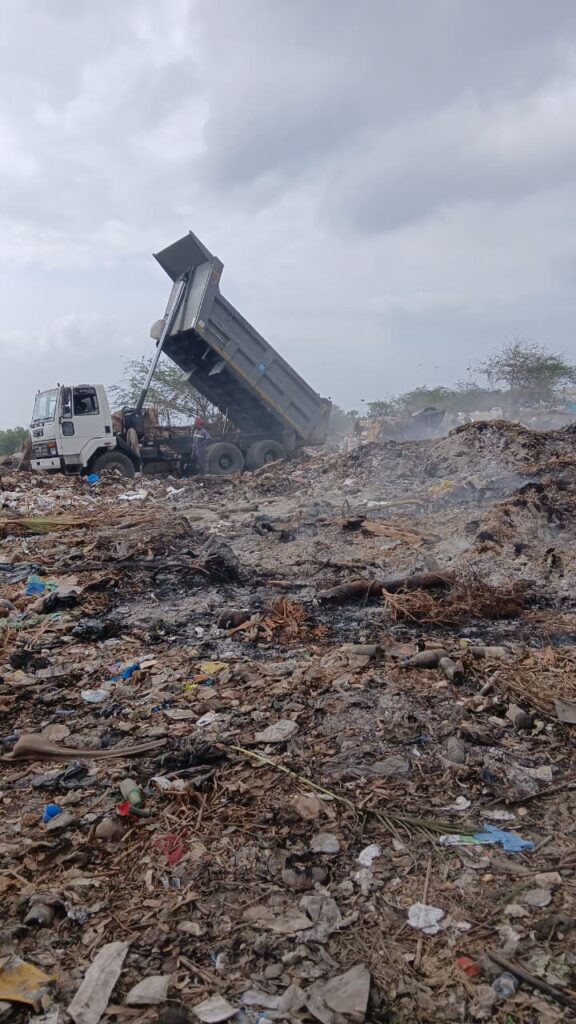
On the morning of 29th January, during one of our regular visits, PWAM returned to the dumpsite along Casuarina Road a place we continue to monitor as part of our ongoing environmental work in Malindi. Each visit reinforces the urgency of the situation, and what we witnessed this morning was once again deeply concerning. We urge members of the public to make a site visit to see the situation first hand.
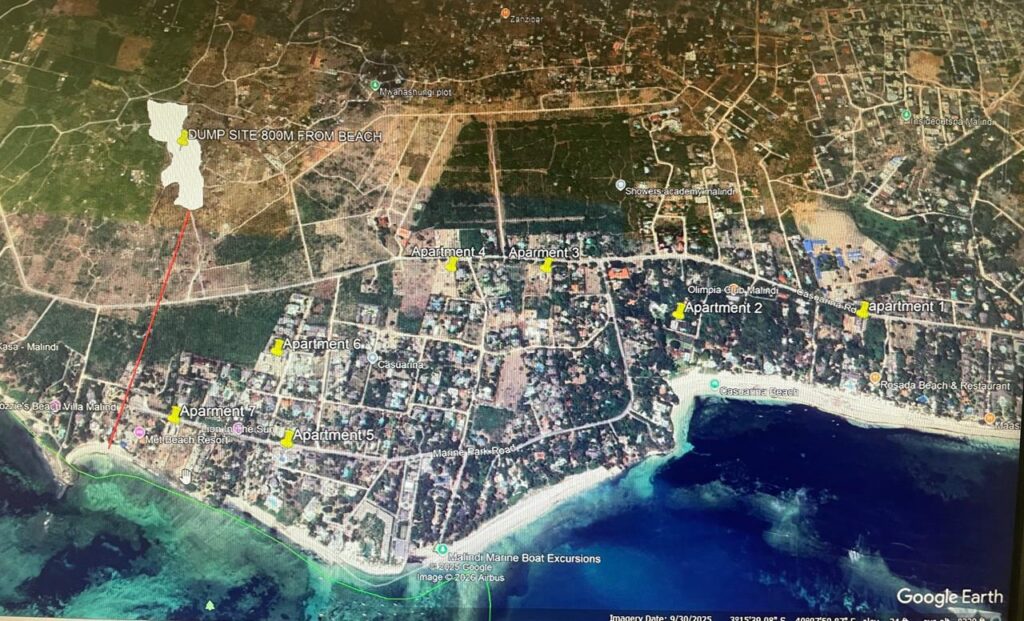
The dumpsite is located just 800 meters from a Marine Protected Area, one of Malindi’s most valuable natural ecosystems. Yet day and night, waste is openly burned, sending thick smoke into the sky and across Malindi, reaching as far as Watamu. The air we breathe is polluted, and our ocean the heart of our tourism, fishing, and livelihoods is slowly being poisoned.
What made the situation even more alarming was the kind of waste being dumped there. Hospital waste, fecal waste, household waste, food remains, plastics, and glass are all thrown together in one place with no segregation at all. This shows how we as a community have failed to be mindful of our waste from the source, allowing everything to end up at the dumpsite where it is burned, polluting both the air and the sea.
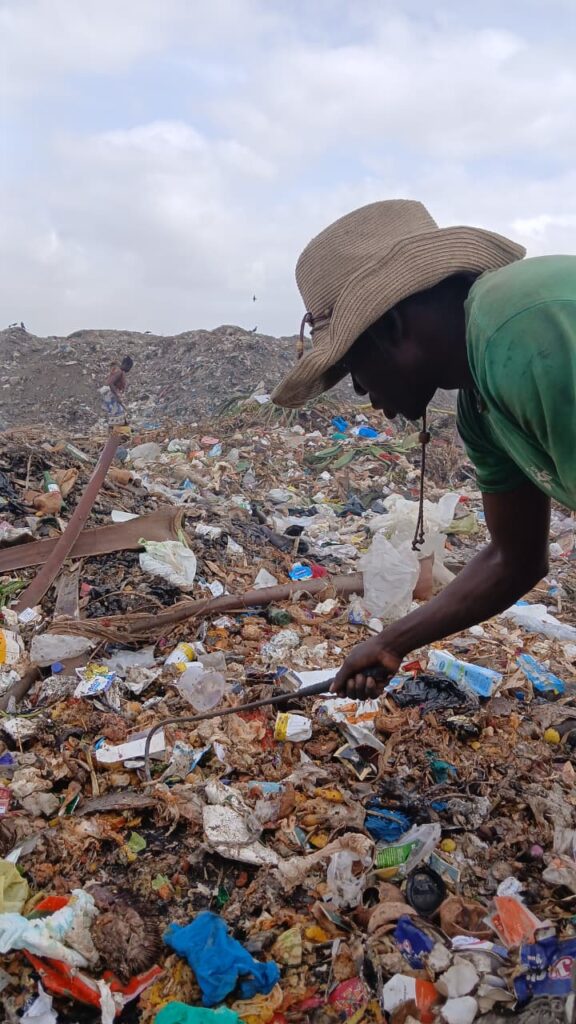
One of the most heartbreaking moments was meeting Mwango Kalu, who was scavenging for food waste among the trash. Right beside a child’s diaper, he picked raw fish scraps and explained that he would wash them, cook them, and eat them because this is his only way of surviving. No one should ever have to live this way, yet this is the daily reality for many dumpsite dwellers.
This is why segregation at source is so important. If waste was separated in homes, hotels, hospitals, and businesses, food waste could be safely collected and donated to vulnerable communities, glass could be upcycled and resold for décor and reuse, plastics could be recycled instead of burned, and hazardous waste could be handled responsibly. What we would create is not a dumpsite, but a circular economy system where waste becomes opportunity instead of pollution.
At PWAM, we strongly believe that establishing a Circular Economy Hub in Malindi is a critical step toward solving these challenges as per the Sustainable Solid Waste Management Act (2022). Such a hub would support segregation, recycling, upcycling, composting, and proper waste management, drastically reducing what ends up being burned at the dumpsite.
This blog is a call to action for partners, donors, government authorities, private sector players, and the entire community. We urgently need to stop open burning at the dumpsite, introduce and enforce waste segregation at source, support sustainable recycling systems, and eventually relocate the dumpsite away from sensitive environmental areas.
We cannot do this alone.
PWAM welcomes partnerships, technical support, and donations to help us build the Circular Economy Hub and implement long-term solutions for Malindi’s waste crisis.
The situation is urgent but change is possible if we act together. By working collectively, we can protect our marine ecosystem, safeguard public health, restore dignity to vulnerable communities, and secure a cleaner future for generations to come.
Let this not be another story we read and forget.
Let it be the moment Malindi chose to act.
Together, we can turn waste into opportunity — and crisis into change.